OpenClaw
Early adopter and contributor.
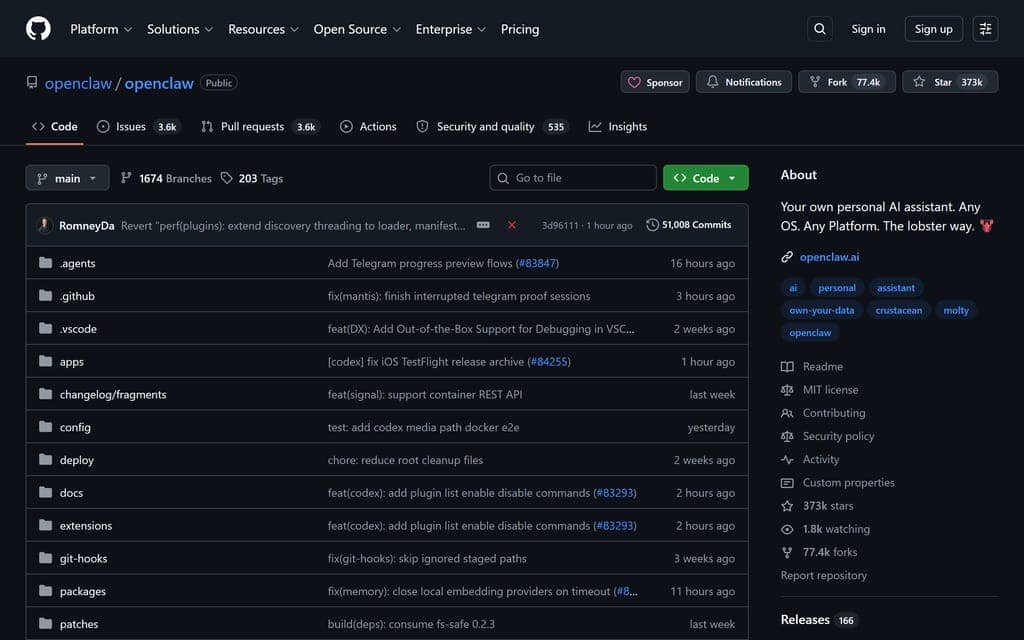
the project
OpenClawis an open-source agent orchestration framework — one of the earliest working takes on multi-agent task execution, shipped before “agent” was a buzzword. I picked it up as a daily driver in 2024 and ran it locally on Windows 11 while building the precursors to my current Kayley Cowork stack.
what i noticed
Heavy daily use surfaced a debug-UX gap. The Settings → Debug → Event Logpanel rendered event payloads inside the same two-column layout the rest of the debug views used. Payloads are high-signal JSON — exactly what you need when something's broken — and they were getting squished into a narrow right-hand column. Readability dropped right at the moments I needed it most.
the contribution
PR #30978 — added Event Log–specific class names in ui/src/ui/views/debug.ts and a scoped CSS override block in ui/src/styles/components.css so Event Log entries render as single-column cards with full-width payload blocks.
- Scope: UI / DX only — no gateway, no RPC contract, no event data shape touched.
- Risk surface:contained to the Event Log view. Empty-state (“No events yet”) unchanged.
- Verification:repro'd locally against real incoming events, hard refresh + gateway restart, before/after screenshots attached to the PR.
outcome
Reviewed and accepted by the OpenClaw maintainers. GitHub labels me as CONTRIBUTOR on the repo. Two +1 reactions on the PR. The Event Log surface in the control UI now reads cleanly at full width.
why it mattered
Debug tooling is the kind of thing maintainers rarely have time to polish — it works “well enough” for them because they wrote it. For a daily user hitting the same surface twenty times a day, those rough edges compound. Small UX patches like this are how a project goes from usable to trustworthy.
stack
- TypeScript control UI built on a lightweight DOM-string template renderer (not React).
- Scoped CSS via co-located class names — no Tailwind, no CSS-in-JS, just disciplined naming.
- Windows 11 local install of OpenClaw used as the repro environment.